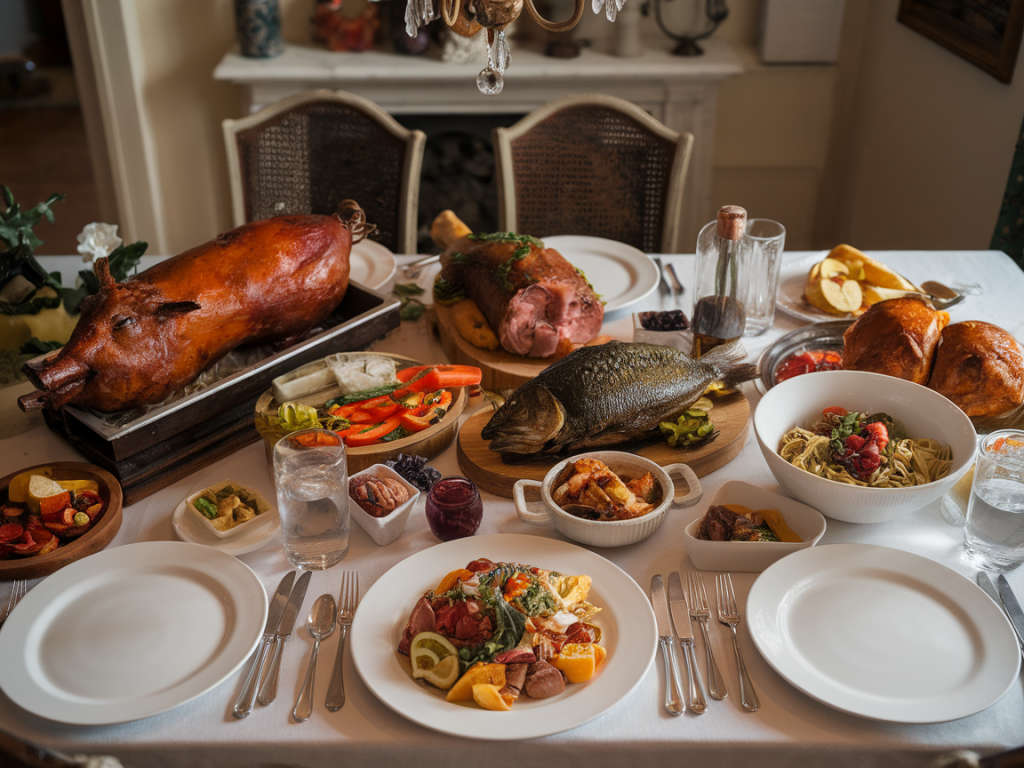
I remember a winter evening in Lisbon when a plate of bacalhau com natas felt less like food and more like memory. It wasn’t the precise recipe that made it belong to that place; it was the light in the kitchen, the bright fennel-scented market stalls that morning, the way a local woman told me how to press the salt out of the cod and then laughed when I fumbled. Since then, I’ve tried to cook dinners that carry the same kind of belonging — dinners that taste like a place I visited rather than a recipe I slavishly followed.
If you want to do this too, the trick isn’t technique or a single ingredient. It’s assembling a small set of choices — sensory, practical, and empathetic — that pull a meal toward a place. Below are the methods I use, with examples and small experiments you can try at home.
Start with a single strong memory
When I return from a trip the first thing I do is jot down one or two strong sensory memories: a smell, a texture, a sound, a moment. For Kyoto it might be the damp paper of an umbrella and the charcoal from a yakitori grill. For a Greek taverna it could be lemon, oregano, and the scrape of a spoon against a ceramic dish.
Pick one of those memories as the anchor for the meal. Don’t try to replicate an entire cuisine. Instead, ask: what single element would instantly take me back? Use that as your guiding flavor or technique.
Choose a small palette of ingredients
Places often feel cohesive because they use a limited set of flavors well. Rather than gathering every “authentic” ingredient from the store, collect three to five items that layered together will evoke the place.
- Example — Istanbul night: yogurt, dill, flaky flatbread, smoked paprika, pomegranate molasses.
- Example — Oaxaca market: corn tortillas, roasted chiles, queso fresco, lime, cilantro.
- Example — Marseille waterfront: fennel, tomato, anchovy, crusty bread, lemon.
These aren’t recipes. They’re a toolkit. Think about texture (silky yogurt, crunchy bread), aroma (char from chiles, ocean salt), and a recurring seasoning (lemon or sumac) that ties everything together.
Borrow a technique, not the whole recipe
I often steal a technique I liked from a place — grilling fish over coals, quick-pickling, slow-simmering a tomato base — and use it on local ingredients. Techniques carry atmosphere. Char from an open flame suggests street-side cooking. Long braises whisper of rainy afternoons and comfort.
Example: in Marrakech I loved the way spices bloom when briefly sautéed in oil. Back home I use that idea to sauté onions with saffron and cumin, then add local chicken — the technique brings the place; the chicken keeps it practical.
Make substitutions thoughtfully
Chances are you won’t find the exact produce or cured meat you had in a foreign market. That’s fine — substitutions are where creativity happens. Aim for the same sensory role rather than identical origin.
- Missing striploin? Use another fatty cut that will give similar texture after searing.
- No preserved lemons? Use lemon zest and a touch of olive brine for the same briny-citrus note.
- If you can’t find a specific chile, consider smoked paprika + a fresh green chile to mimic heat and smoke.
When I cooked a Sri Lankan inspired dinner in London, I couldn’t find pandan leaves. I used a little vanilla and lime zest in the desserts to suggest the aroma instead. It wasn’t perfect — but it felt honest and place-adjacent, not fake.
Layer flavors in stages
Good place-feeling meals often build flavors in steps. A baseline (salted grain or bread), an aromatic stage (onions, garlic, toasting spices), a primary ingredient (fish, eggplant, beans), and a finishing note (acid, herb, oil). Think in those layers and sequence them as you cook.
Practical layout for dinner prep:
- Start with a simple starch or base: rice, polenta, couscous, or flatbread.
- Toast or bloom spices to release aroma.
- Add the main — roasted, pan-fried, grilled — and let it develop color.
- Finish with bright acid, fresh herbs, or a drizzle of good oil to lift the whole thing.
Set the scene with small theatrics
Ambience tips transform a plate into a place: play the music you heard there, light a similar candle, or use the same kind of plateware. The sensory pairing primes the brain. At home I’ll play a street busker playlist for Porto nights or put a single sprig of rosemary on the table after a day in the mountains.
One low-effort trick that works nearly every time: serve something at the table that invites interaction. A board of pickled vegetables, a communal pan, or a bowl of warm bread encourages the casual, shared feeling of many markets and tavernas.
Tell the story as you serve
When you bring the food out, say one short sentence about why it feels like that place. I’ll say things like: “I was sitting on a tiny bench near the harbor when I first tasted this; the fish was still warm from the grill.” It softens the expectation of “authenticity” and invites conversation about the memory instead of the recipe.
Embrace improvisation at the table
Part of what makes a meal feel like a place is unpredictability. Let guests (or yourself) add a few finishing touches: tear fresh herbs at the table, pour a sauce, or squeeze lemon over a dish. It recreates the improvisational, communal feel of being in a new city where meals are often made and eaten in the same small window of time.
Examples of simple menus that evoke a place
| Lisbon-inspired | Griddled cod with garlic and olive oil, roasted potatoes with smoked paprika, bitter greens dressed with lemon |
| Seaside Greece | Charred octopus or grilled halloumi, tomato-cucumber salad with oregano, crusty bread, ouzo or dry white |
| Moroccan evening | Slow-roasted carrots with cumin and harissa, chickpea and preserved lemon stew, mint tea |
| Tokyo izakaya mood | Yakitori-style chicken skewers, quick cucumber sunomono, steamed rice, cold beer |
Learn what matters by tasting backward
After the meal, write down what truly recalled the place. Was it the char? A pickled tang? A particular herb? Tasting backward helps you refine future attempts: maybe citrus is your easiest route to a Mediterranean memory; smoke is what brings you back to seaside nights.
These dinners are less about faithful reproduction and more about transmission. You’re trying to move a feeling, not a formula. If the meal prompts a story, a pause, or the desire to look up a photo from your trip — you’ve succeeded.