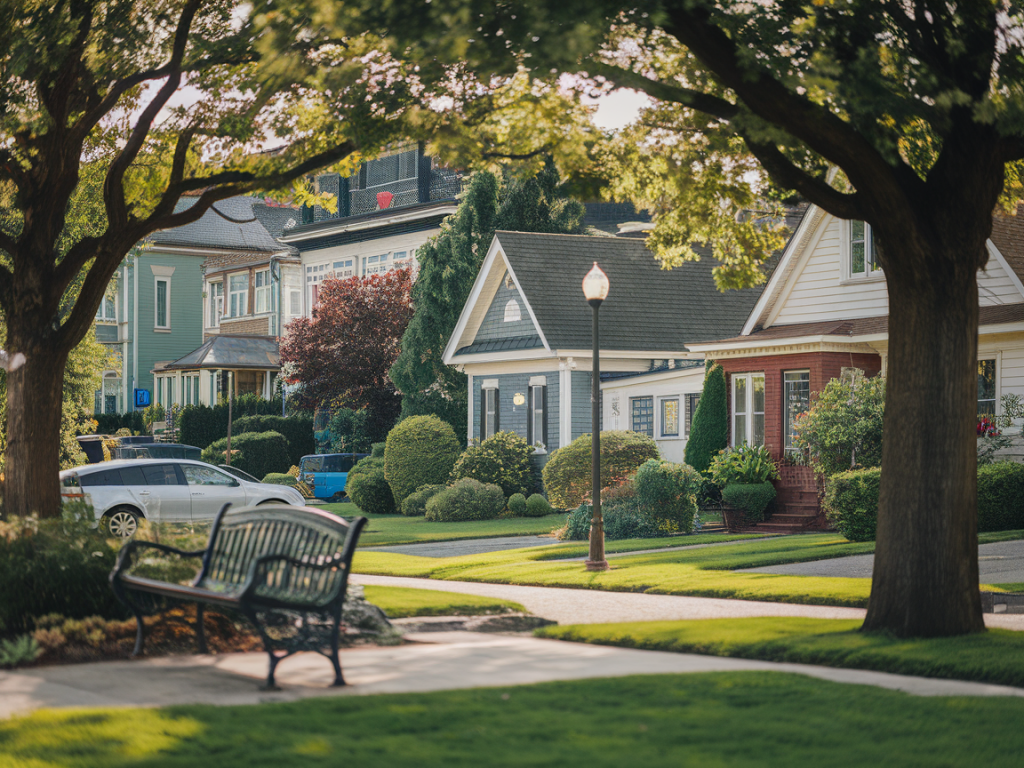
I’ve moved enough times and walked enough city blocks to know there’s a difference between a neighborhood that is objectively low-risk and one that simply feels safe. Feeling safe is not only about crime statistics; it’s about small rituals, visible care, and design choices that tell you the place is alive and watched over in the best sense. Over the years I’ve paid attention to patterns — what calms me on a late walk, what makes me trust a corner café, and what turns a street into a place I’d recommend to a friend. Here are the ideas I return to when I try to explain why some neighborhoods feel secure and others don’t.
Eyes on the street — the social scaffolding
One of the oldest pieces of urban wisdom is Jane Jacobs’ phrase “eyes on the street.” In practice, this means a mix of people going about everyday tasks: shopkeepers, parents with strollers, students, delivery drivers. Those everyday presences create casual surveillance without hostility. I remember a small square in Lisbon where three cafés faced a playground; the baristas kept their doors open, and there was an effortless, mutual attention. I felt safer there than in a supposedly "guarded" mall with uniformed security and closed storefronts.
People create signals: a nod from a shop owner, the way someone parks their bike near a communal bench, a neighbor watering window boxes. These signals tell you the place is used and seen. They’re informal rituals as important as any CCTV camera.
Lighting that invites, not glares
Good lighting is often misunderstood as “more light = safer.” What matters is the quality and intent of light. I prefer warm, even illumination that reveals faces and textures rather than harsh, blinding glare that produces deep shadows. Think of the difference between a well-designed lamppost on a tree-lined avenue and a single, overly bright floodlight behind a fence.
When I walk at night through older neighbourhoods with thoughtful street lamps, I notice people lingering on stoops and in doorways. That lingering is a sign: the lighting makes it comfortable to be outside, which in turn supports casual social interactions and deters trouble. Motion-activated lights can be useful in alleyways, but constant, human-scaled lighting encourages presence instead of startling it away.
Human-scale design and clear sightlines
Scale matters. Wide, monumental spaces can make you feel insignificant and exposed; narrow, intimate streets can feel claustrophobic. I find that streets with a comfortable, human scale — buildings under six stories, street trees, benches, and defined sidewalks — make me feel both oriented and sheltered. Clear sightlines across a street or square help too: if I can see who’s coming, where a bike lane leads, and how the space connects to surrounding blocks, I feel less anxious.
That’s one reason mixed-use neighborhoods often feel safer: they avoid the dead zones of single-use zoning. Shops, apartments, small offices — these create different kinds of activity throughout the day. Designing for natural visibility, such as transparent ground-floor facades instead of solid walls, reduces hidden corners where problems could fester.
Maintenance as a signal of care
I still associate well-maintained areas with social investment. Clean streets, fixed pavement, fresh paint, and tidy public planting all signal that someone cares, and that message is reassuring. It’s not about cosmetic perfection; it’s about the rhythm of upkeep. A cracked window boarded for months says neglect. A hand-lettered sign announcing a community clean-up says the opposite.
Maintenance fosters rituals too. When people sweep their stoops, tend communal plots, or put out well-kept recycling bins, those are repeated acts that bind residents to place. They also make the environment less attractive for vandalism, which is as much a social problem as an aesthetic one.
Rituals that stitch people together
Neighborhood safety is built on social routines. These can be informal — morning runners who nod to each other, the regular dog-walkers who chat beneath an elm — or organized, like community markets, street festivals, or a neighborhood watch. I’ve seen tiny rituals have outsized effects: a local bakery that hands out free coffee to regulars, a school crossing where parents rotate turn-taking, or even a WhatsApp group where people share urgent observations.
Rituals create familiarity. When you know the people around you, you’re more likely to intervene on their behalf and less likely to see them as threats. They build the kind of trust that discourages antisocial behavior and makes it more likely someone will call out a problem early.
Boundaries that welcome — and limit
Neighborhoods need edges that are legible. That doesn’t mean gates and barriers, but rather clear transitions: a tree line that marks a square, a row of small shops that signals the high street, a change in pavement texture where a residential lane begins. These boundaries tell people where different behaviors are expected and make it simpler to read a place.
At the same time, rigid gating can isolate and create blind spots. I prefer liminal edges that invite entry while indicating purpose: a low wall with integrated seating, planters that slow traffic, or an archway with signage. Such features both welcome and orient visitors, producing a calming sense of order without excluding.
Transport choices and predictability
How people move through a place affects safety perceptions. Reliable public transport, calm cycling routes, and pedestrian-first streets encourage steady flows of people, which is reassuring. I’m a fan of complete streets where bikes, buses, and sidewalks are prioritized over fast car traffic. These streets not only reduce accidents but also encourage the kind of everyday encounters that make a neighborhood feel inhabited and watched over.
Where transport is unreliable or erratic — think sporadic bus service or fast cut-through traffic — the environment feels less predictable and therefore less safe. Predictability is underrated: when people can anticipate patterns, they feel in control and more comfortable in public space.
Small, actionable interventions I’ve seen work
- Pop-up markets and night-time street closures: Temporary events bring new eyes and rhythms to a place and often persist in residents’ habits afterward.
- Community notice boards or group chats: These create quick lines of communication and reduce the sense of isolation.
- Adopt-a-tree or pocket-park programs: Small green projects encourage stewardship and give people a visible stake in the streetscape.
- Shopfront activation: Subsidies or incentives for ground-floor businesses to maintain transparent facades and regular hours.
- Human-scale lighting upgrades: Replace harsh sodium lights with warm LED streetlamps aimed to illuminate sidewalks and storefronts.
What to look for when choosing a place to live
When I’m assessing a new block, I watch for patterns rather than single incidents. Do people linger? Are storefronts active? Is there a regular rhythm of presence at different times of day? I also pay attention to small maintenance cues — trimmed hedges, intact signage, cleared gutters. Those details hint at larger social investments.
Finally, I trust my ability to build rituals. No neighborhood comes fully formed. Bringing a potluck, joining a local group, or simply learning the names of nearby shopkeepers are small moves that increase both your sense of safety and the actual safety of the place.
If you’re curious to explore more, I’ve written pieces on specific urban design moves (bench placement, lighting design, and micro-parks) on Chancerne Co at https://www.chancerne.co.uk. For me, feeling safe in a neighborhood is a shared achievement — a mix of design, care, and everyday human rituals that together make a place worth staying in.