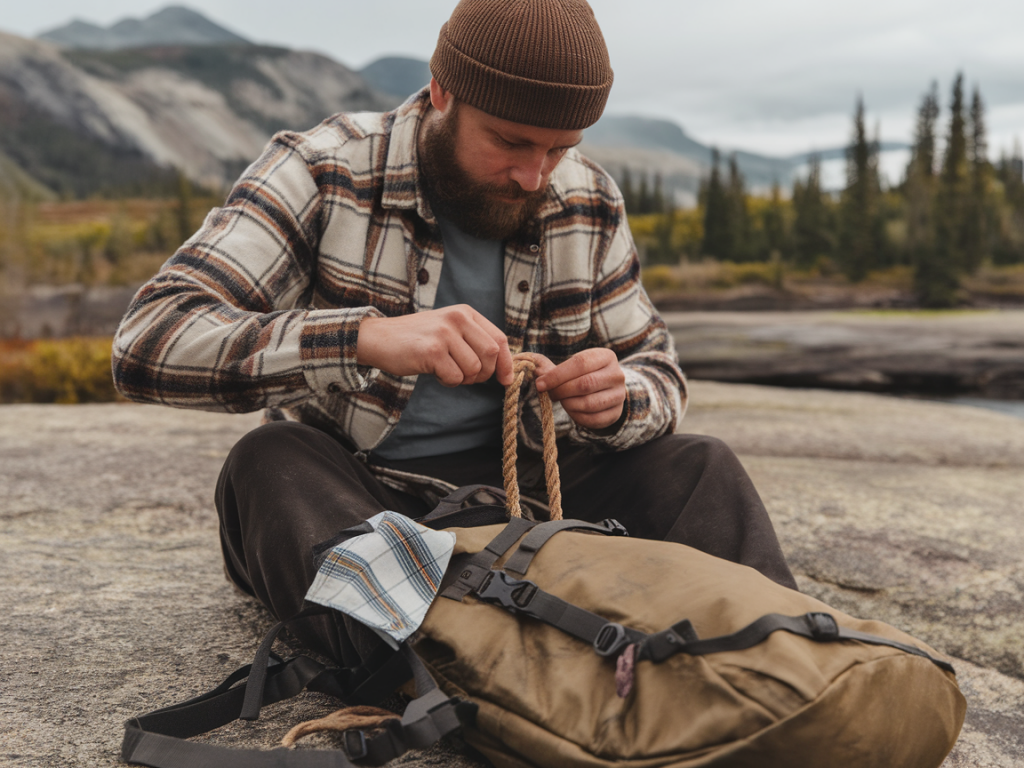
I learned the value of low-tech travel gear halfway up a wet ridge in Galicia, Spain, when my headlamp decided to die and all I had was a handkerchief, some hemp rope, and a stubborn sense of optimism. The headlamp’s battery light had gone from hopeful green to blink to nothing, and the fancy little gadget that had been blinking at full price suddenly felt like a fragile prop. The handkerchief became a headwrap, the hemp rope an improvised shelter guyline, and the awkward, grainy moonlight was enough to get us down without panicking. That evening stuck with me not because the gear failed, but because the simple pieces I was carrying did more than the expensive one ever could.
Why "low-tech" isn’t backward
There’s a tendency to equate freshness with function: newer, smaller, and more digital must be better. But long trips reward resilience, adaptability, and repairability—qualities low-tech gear excels at. A handkerchief, a length of hemp rope, a needle and thread, a tin whistle, a bandana, or even a small tin of beeswax are tools with many uses. They’re simple to fix, simple to understand, and their failure modes are predictable.
Fancy gadgets are seductive—bright LEDs, multifunctional apps, custom battery packs—but they also introduce single points of failure. Software updates, proprietary chargers, or a sealed unit that can’t be opened in the field create fragility. Low-tech items often invite improvisation, and improvisation wins when conditions surprise you.
Practical versatility: one object, many lives
On long trips you want gear that multitasks. I travel with a small kit of low-tech items because each one stretches into dozens of situations:
- Handkerchief / bandana: sun protection, filter for coffee, sling for a sprained wrist, sweat rag, dust mask, impromptu towel, placemat.
- Hemp rope (or simple natural-fiber cord): drying line, shelter tie-out, lashing for a broken pack frame, clothesline, stretcher strap in emergencies.
- Needle and waxed thread: reattach a button, sew a tear, repair a rip in a tent or pack.
- Safety pins and small clothespins: temporary hem, replace a zipper pull, keep bandages in place.
- Small metal cup and folding spoon: cook over a fire, melt wax or soap, measure, signal with a reflective surface.
Each of these is cheap, light, and replaceable in most places—qualities that matter when you’re traveling for weeks or months and can’t always get to a store that sells a very specific replacement part for a high-tech device.
Durability and repairability
One of the most practical differences between low-tech and high-tech is repairability. If a battery dies in a plastic lantern, often the lantern is useless until you find the exact batteries or a replacement unit. If your hemp rope frays, you can splice it, knot around the damage, or melt and re-twist the end in minutes. A sewn patch with heavy thread will restore a canvas pack more permanently than some glued-on synthetic patches.
I carry a small patch kit and a roll of gaffer tape partly because they fix 90% of common travel misfortunes. But I also carry a roll of beeswax. Beeswax seals frayed rope ends, waterproofs canvas, and softens stiff leather. None of these are glamorous, but they keep things functioning long after a glossy gadget would be relegated to a drawer.
Simplicity reduces mental load
Travel isn’t only about gear surviving; it’s about you staying sane. Batteries die, screens glare in bright sun, apps crash. Low-tech items remove layers of decision-making. A handkerchief doesn’t need an instruction manual. Hemp rope doesn’t require firmware. When you travel long-term, having fewer things that demand maintenance is liberating.
I’ve noticed a specific psychological benefit: low-tech gear invites creativity, and creativity lightens stress. Faced with a problem, your brain can tinker with simple materials right away—wrap, tie, fold, sew. With a complex gadget, your options narrow: replace, charge, or abandon. On long trips, I prefer open-ended tools.
Environmental and ethical considerations
Low-tech gear often has a smaller environmental footprint. Natural fibers like hemp or cotton biodegrade more easily, and tools that are designed to be repairable don’t feed the throwaway economy. Hemp rope, for instance, is durable and made without intensive chemical processing compared with some synthetic ropes. A good cotton handkerchief will last years and requires no disposable waste like tissues or single-use wipes.
There’s also an ethical dimension. Many high-tech travel products rely on complex supply chains and sometimes questionable labor practices. Choosing fewer, more durable, low-tech items can be a small way to reduce your complicity in those systems.
When high-tech still belongs in the kit
I’m not advocating for a Luddite bag dumped at the trailhead. There are clear, lifesaving advantages to modern tech: reliable GPS, a satellite messenger like a Garmin inReach, and a high-quality water filter are indispensable in some contexts. The point is not to replace all tech, but to prioritize simplicity for the bulk of your kit and reserve complexity for the must-haves.
For example, I pair a compact, dependable headlamp (I like lamp bodies with simple on/off switches rather than complicated modes) with a handkerchief. If the headlamp fails, the handkerchief and a strong knot in hemp rope keep us safe. I take a basic external battery but keep it for devices that truly need it—phone navigation and an emergency beacon—rather than powering a cloud of gadgets.
Practical low-tech packing list
Below is a minimalist list I’ve refined over years of extended travel. Each item has survived long trips in cities, deserts, mountains, and monsoon season.
| Item | Main uses |
|---|---|
| Handkerchief / bandana | Multipurpose cloth: filter, scarf, sling, towel |
| Hemp rope (5–10 m) | Guyline, clothesline, repair cord |
| Needle & waxed thread | Stitch tears, attach buttons |
| Safety pins & clothespins | Temporary fixes, hanging, fastening |
| Beeswax | Waterproofing, leather care, rope end sealing |
| Small metal cup / spoon | Cooking, measuring, signaling |
Small habits that amplify low-tech gear
Carrying low-tech items works best if you also adopt habits that support them. I keep my rope coiled and re-tie it after use so it doesn’t tangle. I wash and dry handkerchiefs regularly to prevent mildew. I learn a few knots and basic stitches—skills that take minutes to learn and last a lifetime. These small practices are the multiplier effect of simple gear.
Ultimately, long travel rewards the able mind and a few adaptable tools. A handkerchief and a length of hemp rope won’t replace all modern conveniences, but they often outperform costly gadgets when you need flexibility, repairability, and calm under pressure. The gear you can mend with a needle and a little patience tends to keep you moving—quietly, efficiently, and without the drama of a gadget’s last blink.