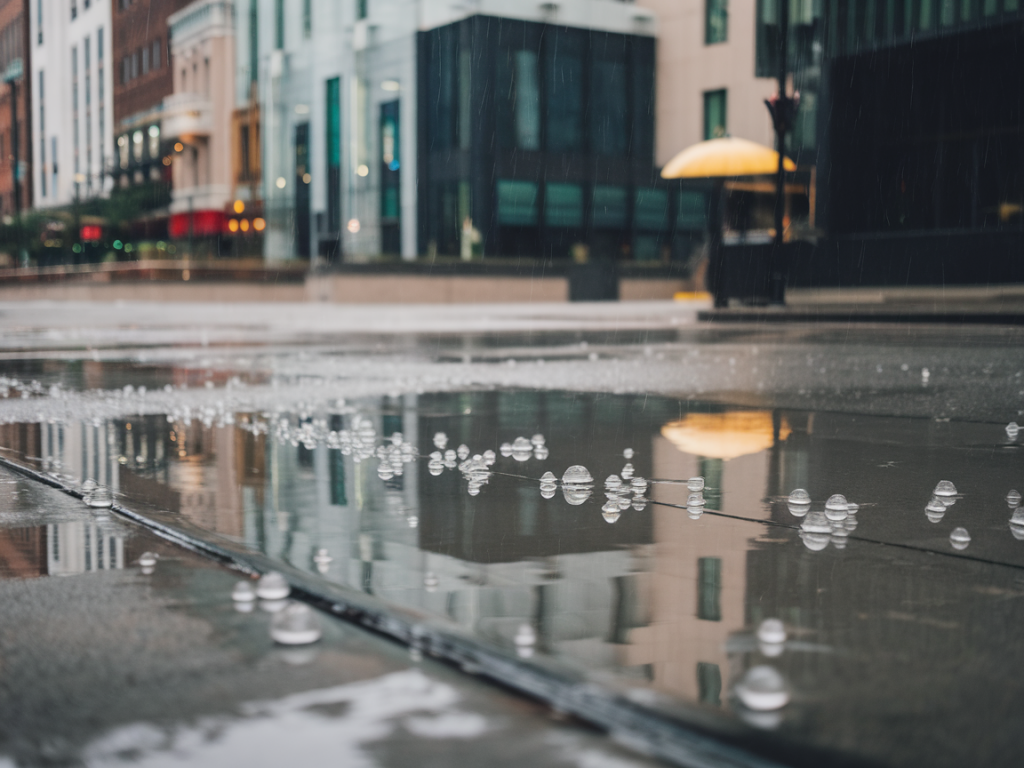
I remember once standing on a rooftop in London after a long dry spell, watching the first fat drops hit the hot pavement. The sound was soft, but what stole me was the sudden, sharp inhalation I didn't know I'd been holding: a cool, green scent that felt like the city had exhaled and revealed a private history. That smell—petrichor, with a chorus of other notes—always feels like a small miracle. It tells a story about water, soil, plants, and, in cities, the invisible chequebook of pollutants we're all managing together.
What makes rain smell the way it does?
The classic "rain smell" is a mix. Three chemical players get most of the credit:
Each of these compounds is volatile—meaning they evaporate into the air easily—and our noses are exquisitely tuned to detect them at very low concentrations. That sensitivity is part biology, part evolution: in wild landscapes, following the smell of rain could mean finding water, fresh soil, or prey. In cities, the same reflex maps onto a different terrain—puddles, asphalt, and a thickening of human-made chemicals.
How urban pollution changes the fragrance of rain
When rain falls through a polluted urban atmosphere, it collects and reacts with a variety of airborne chemicals. Particulate matter, nitrogen oxides (NOx), volatile organic compounds (VOCs), and hydrocarbons from vehicle exhaust or industrial processes can alter how rain smells in two main ways.
Researchers have measured these shifts. A study comparing rural and urban rainfall found distinct differences in volatile organic compound profiles, with urban rain showing higher proportions of human-made VOCs and combustion byproducts. Practically, that means the "fresh" smell in a rural meadow tends to be dominated by geosmin and plant volatiles, while a city street's after-rain aroma is a more complex—and sometimes compromised—mixture.
Why rain triggers memory more than other smells
Our sense of smell is wired differently from other senses. Olfactory signals go straight to the limbic system—the part of the brain involved in emotion and memory—before being processed by higher cortical areas. That's why the scent of rain often opens doors to vivid memories: a childhood walk, a summer holiday, the smell of a particular street market.
In urban contexts, this can be surprisingly specific. A particular intersection's post-rain scent might anchor memories of a commute, a bookshop, or a late-night takeaway. Smell cues are contextual—tied to place, temperature, humidity, and the invisible ledger of pollutants present at that time. So a drizzle in Paris smells different not only because of different plants or soil but because of a unique mix of human activities and atmospheric chemistry.
What the changing smell of rain tells us about air quality
Smell can be an informal sensor. Certain shifts—persistent metallic or chemical notes, an increase in acrid or dusty undertones after rainfall—can indicate elevated pollutants. While human nose reports are subjective, systematic observations can be revealing:
I keep an eye on AQI tools like the UK Department for Environment, Food & Rural Affairs (DEFRA) maps or apps such as Plume Labs and PurpleAir. These won't give you a scent profile, of course, but they show correlations: high particulate spikes often coincide with less pleasant post-rain smells.
Practical things we can do—and small experiments to try
We can't control the weather, but we can nudge our urban senses and environments.
| Compound | Typical origin | Perceptual quality |
| Geosmin | Soil bacteria | Earthy, sweet |
| Petrichor | Plant oils & soil | Warm, green |
| Ozone | Lightning, electrical discharge | Sharp, metallic |
| NOx/VOCs | Vehicles, industry | Acrid, chemical |
It's tempting to romanticize the smell of rain as a universal balm. But paying attention to how that scent changes—especially in cities—lets us read a different kind of weather map: one of air quality, human activity, and ecological resilience. The next time you step into that clean, damp moment after a shower, take a breath and try to name what you smell. It may be a small, private ritual, but it's also a way to notice how our lives intersect with the chemistry of the world around us.