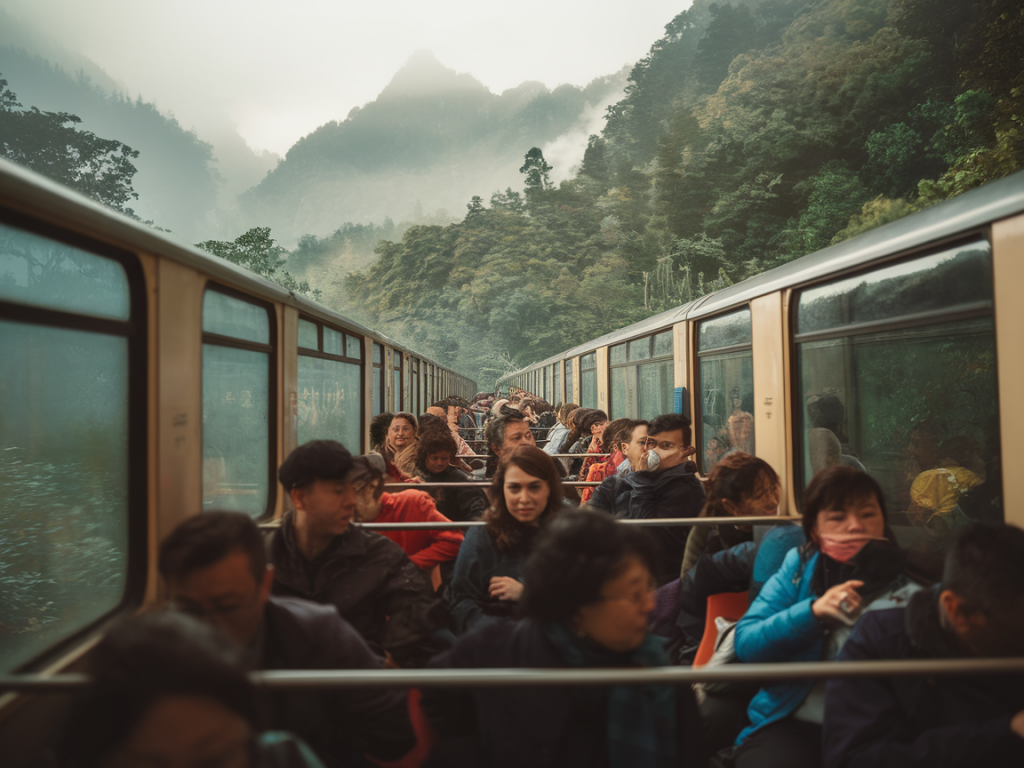
There’s a particular kind of attention that comes on board a train. It’s not the directed attention of a theater or the guarded attention of a commuter bus; it’s softer, more porous. You notice the angle of light on a stranger’s book, the way a child draws circles on a fogged window, the rhythm of announcement chimes folding into a city you’re leaving behind. Over the years I’ve come to see train journeys as informal classrooms for how public space can be shared — and how unexpected conversations can reshape how we think about strangers, time, and care.
Why do trains invite conversation?
People often ask: Why do I feel more likely to talk to someone on a train than on the street? Part of it is the architecture. Train cars are semi-enclosed and move together through space; they create a temporary community with a defined start and end. There’s a suspended quality to the interaction — an understanding that the encounter has boundaries. That makes breaches of social script feel less risky.
Another answer is time. On a plane, we brace for long hours; on a busy platform, we’re hurried. But on a medium-length train ride, there’s enough time for a short exchange to evolve into a real conversation without demanding a full commitment. People relax into that timing, sharing small details because they can be safely untied later when the trains split and life resumes.
What kind of conversations happen?
- Practical exchanges: directions, local tips, or a shared complaint about a delay. These are the most common and easiest — useful, unambiguous, and low-stakes.
- Local knowledge swaps: recommendations for restaurants, which streets to avoid, or where to buy fresh bread. These are how cities learn to newcomers through the mouths of neighbors.
- Personal stories: brief confessions, travel plans, or the story behind an unusual object someone is carrying. These can be small but revealing, opening a window into a life you otherwise wouldn’t meet.
- Philosophical digressions: sometimes a longer trip and the steady motion spark deeper talk — on art, politics, or the meaning of work. These are rarer but memorable.
People often worry the modern world has eroded such exchanges — headphones, screens, and individual schedules are real obstacles. But trains still produce recurring opportunities. A glance, a smile, an empty seat — they are tiny invitations. I’ve found that lowering my own defenses, turning off the urge to perform solitude, yields the most surprising returns.
What do these conversations teach us about public space?
They teach that public space is negotiated, not predetermined. A carriage becomes “ours” when passengers acknowledge one another. Rules form spontaneously: someone offers a bag-laden passenger a place; someone else switches their phone to silent; a group concedes a bench to an elderly couple. These acts aren’t legislated; they are learned through practice.
We also learn about boundaries and consent. A good conversation on a train respects the rhythm of the space. It doesn’t demand intimacy, and it leaves room for exit. People are cautious but willing. That mutual respect is itself a kind of civic infrastructure — soft, maintained by thousands of small interactions rather than by signs or regulations.
How can you start a conversation without feeling awkward?
- Comment on something obvious: a book, the weather, or the next stop. It’s simple and neutral.
- Ask a practical question: “Is this seat taken?” or “Does this train stop at X?” Practicality lowers the pressure.
- Offer something small: a napkin, an opinion on a local dish, or a suggestion when someone looks lost. Generosity disarms.
- Read cues: if someone gives short answers or keeps their headphones in, it’s a polite refusal. No need to take it personally.
I remember once on a late-night regional service, the carriage was sparsely filled and a man across from me clutched a battered fishing rod case. I asked — because curiosity on trains feels like a civic duty — and he began teaching me about river spots near his hometown, describing the smell of limestone and the taste of tea afterward. The exchange lasted fifteen minutes before he slept and I carried that tiny map back to the city with me. It was an ordinary lesson about the way strangers can be the best local guides if we only ask.
How do cultures shape train interactions?
Train etiquette varies wildly. In Japan, the unspoken rule is quiet and minimal eye contact; in Italy, trains can feel like communal living rooms where voices and gestures are animated. But beneath these cultural differences there’s common logic: people orient their behavior to norms that reduce friction. Learning those norms — listening more than speaking at first, mirroring volume and openness — is itself a practice of respect.
One time in Lisbon I shared a tram with a woman who launched into a cheerful monologue when our stop came up. In New York, a similar eruption might have been met with suspicion, but here people leaned into the conversation. That moment reminded me that public spaces are elastic: they stretch to accommodate different temperaments if we give them permission.
What do train conversations reveal about listening?
On trains, listening feels less like an obligation and more like an opportunity. There’s a kind of slow attention available when you have nothing urgent to do and someone decides to tell you something. That listening builds empathy in small increments. It’s how a neighbor’s worry about rent becomes more than a statistic, how a traveler’s delight in an island becomes contagious. Listening trains us to see life in fragments rather than headlines.
Practical ways to nurture better public conversations
- Small gestures matter: a smile, offering to switch a seat, or sharing a charger can catalyze trust.
- Model low-risk openness: comment on your own curiosity rather than interrogating others. “I’m always looking for good coffee around here — any tips?”
- Respect the time-frame: keep early exchanges light; allow depth to emerge if the other person reciprocates.
- Teach kids the art of the brief hello: they’re the future of public space norms. A simple “thanks” or “excuse me” goes far.
Riding trains has taught me that public space is a practice rather than a place. It’s a set of habits — noticing, offering, listening, stepping back — that allow for moments of connection without expecting them. If you’re looking for a small social experiment, try this on your next trip: put your phone away for a quarter of an hour and see what happens when you make eye contact and ask one simple question. You might find a new route, a new friend, or just a story that makes the landscape outside the window look different.