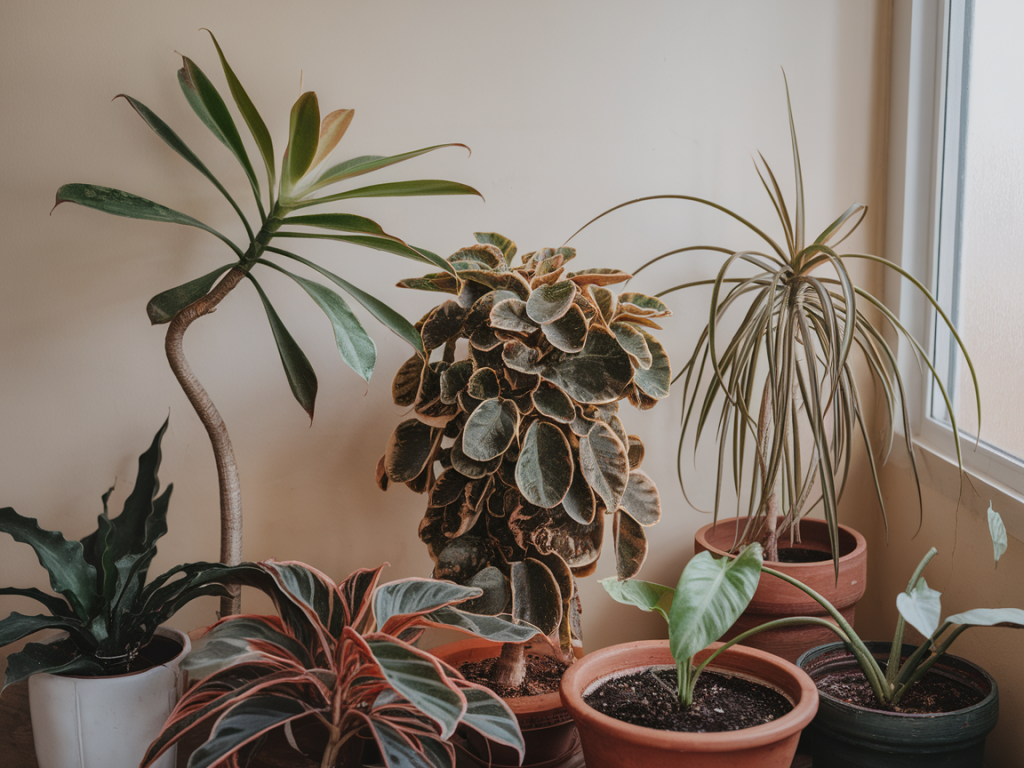
I’ve killed more houseplants than I care to admit. Some were gifts, some were impulse buys at garden centres because the leaves looked promising under fluorescent lights, and some I honestly thought I could revive with a heroic dose of water and will. Over time I learned a few patterns: plants don’t die from mystery so much as from a handful of repeatable mistakes. If your pothos, snake plant, or temperamental fiddle leaf fig keeps sulking and shedding leaves, the problem is probably one of the following five issues — and each one has a fix that actually works.
Too much love: overwatering
When I was new to plants I equated care with water. Brown tips? Water. Drooping? Water. If it was on a windowsill I thought it wanted a drink hourly. What I didn’t realize was that most houseplants are adapted to survive dry spells, not waterlogged soil. Overwatering suffocates roots, invites fungal rot, and turns healthy soil into an anaerobic mess.
Signs of overwatering:
Fixes that actually work:
Insufficient light: the silent killer
Light is the fuel for a plant. Too little and photosynthesis stagnates; leaves yellow, stems stretch toward the window (a sign called etiolation), and the plant becomes leggy. I remember trying to keep a too-large monstera in a north-facing hallway because “it looked nice there” — within months it had thinner leaves and far fewer splits.
How to tell if light is the problem:
Simple solutions:
Poor soil and containers
Not all potting mixes are created equal. I once repotted a snake plant into an “all-purpose garden soil” from a hardware store and watched it decline over weeks. Garden soil compacts in pots, retains too much moisture, and lacks the aeration that roots need.
| Plant type | Recommended soil | Pot type |
|---|---|---|
| Succulents/Cacti | Fast-draining gritty mix | Terracotta with drainage |
| Aroids (Monstera, Pothos) | Aerated mix with perlite/bark | Plastic or ceramic with drainage |
| Orchids | Chunky bark or bark-sphagnum mix | Slotted orchid pots for airflow |
Humidity and temperature mismatch
Plants come from places with very different climates than typical heated flats. Tropical plants like philodendrons, calatheas, and ferns want humidity. Dry central heating in winter can lead to brown leaf edges, crisping, or leaf drop. Conversely, a drafty window or cold door can shock tender plants.
Pests and disease neglect
Pests like spider mites, mealybugs, scale, and aphids can quietly sap a plant’s vigour. I once ignored a tiny cottony patch in a pothos because it didn’t seem like much — until it spread. Mold and fungal diseases also thrive when conditions are both damp and stagnant.
Small habits that make a big difference
Beyond the big five mistakes, a handful of everyday habits will make your plants happier:
Plants respond to patterns more than gestures. A routine of checking soil moisture, rotating plants for even light, and scanning for pests will prevent most deaths. And when a plant starts to fail, a calm inspection — look at the soil, the roots, the leaves — can tell you which of these five mistakes is the likely culprit, so you can act with a targeted fix instead of more well-meaning but harmful “care.”